
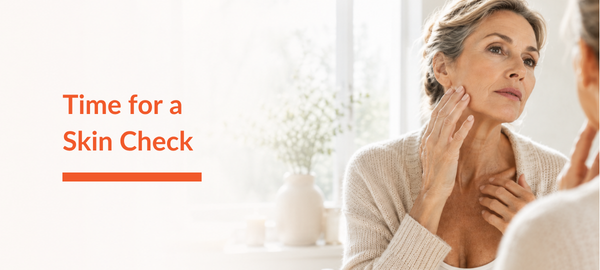
Summer might be over, but your skin does not reset with the seasons.
For many Australians, autumn is when things slow down just enough to notice the changes summer left behind — a new spot, a rough patch, persistent redness, or something that simply looks different to how it did a few months ago.
That does not mean panic. But it can mean it is worth paying attention.
Why autumn is a smart time for a skin check
Australia has some of the highest skin cancer rates in the world. Two thirds of Australians will be diagnosed with skin cancer during their lifetime, according to Cancer Council Australia. That makes skin cancer prevention part of overall health, not an optional extra.
Long beach days, weekend sport, gardening, driving, walking the dog — it all counts.
Summer often brings the highest exposure, but many people are too busy to think much about their skin until afterwards. Autumn can be a useful prompt to check in.
What changes are worth noticing?
Between skin checks, the most useful thing you can do is get familiar with your own skin and notice when something shifts. Because skincare supports skin health. It does not diagnose suspicious lesions.
Self examination doesn’t replace a professional skin cancer check, but it helps you pick up on warning signs early so you can get a professional opinion before something has time to progress.
Try doing a self-check every three months or so. Not because things change that fast in most cases, but because if you know what your skin normally looks like, you’ll spot something new much faster.
You don’t need special equipment. A well-lit room, a full-length mirror, and a hand mirror for your back, scalp, hair line, and behind your legs. Check your entire body, including areas you might not think to look at. If someone can help you check, even better. Photographing spots you want to track is also useful. It gives your doctor context if you do need to book in, and it’s far more reliable than trying to remember what a mole looked like three months ago. Some people use smartphone apps to photograph and track spots, but these are not a substitute for a professional skin examination. Cancer Council Australia has a useful guide on how to check your skin at home.
Who should be extra mindful?
Anyone can benefit from being aware of their skin, but regular skin checks may be particularly relevant if you:
- have fair skin
- have spent years in the Australian sun
- burn easily
- work outdoors
- have had significant sun exposure through sport or lifestyle
- have a personal or family history of skin concerns
Even if you have been more diligent with sunscreen in recent years, earlier sun exposure still matters.
Do you still need sunscreen in autumn?
Short answer: yes.
In Australia, UV levels can remain high well beyond summer, and incidental exposure adds up quickly. That coffee run, school pickup, lunch walk, or drive with the sun on your arms all contribute.
Sun protection is not just a summer habit.
If you prefer low-fuss skincare, using a daily sunscreen you actually enjoy makes consistency much easier. SolarCareB3 Defence SPF 50 combines broad-spectrum SPF 50 with 5% Vitamin B3 (niacinamide) in a lightweight formula, making it a simple one-step option for everyday protection.
Supporting sun-damaged skin beyond SPF
Protection matters, but so does supporting your skin day to day.
Vitamin B3 (niacinamide) is a well-researched skincare ingredient that can help support barrier function, moisture retention, and improve the appearance of sun-damaged skin when used consistently.
For a simple evening routine, a dedicated niacinamide moisturiser can help support skin overnight. SolarCareB3 Moisturiser is formulated with 5% Vitamin B3 for face and body, while Intensive B3 offers a higher-strength 10% option for those wanting more targeted support for areas like the face, neck, chest, or hands.
If you’re curious about how niacinamide benefits sun-affected skin, we have a helpful FAQ on Vitamin B3 for sun-damaged skin, plus a practical week-by-week guide on what to expect when using niacinamide.
The goal does not need to be a complicated ten-step routine. Daily protection, plus consistent support, often goes much further than skincare perfection.