
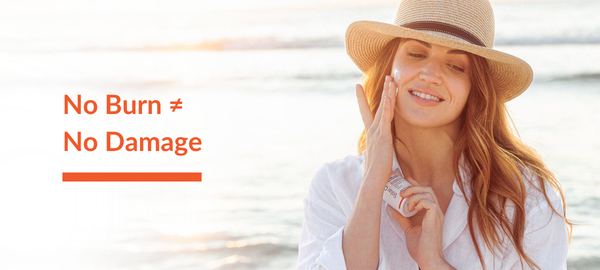
You spend an hour outdoors on a mild spring day. Your skin feels fine afterwards. There’s no redness, heat or peeling. Does that mean the sun had no effect?
You can have UV exposure without getting sunburnt. Sunburn is a visible sign that your skin has received too much ultraviolet (UV) radiation at one time. It isn’t a test for whether your skin was exposed to UV at all. That distinction matters as the weather warms up and more of our ordinary days include time outside.
What does sunburn tell you?
Sunburn is your skin’s reaction to a high dose of UV radiation. Depending on your skin and the exposure, you might notice redness, warmth, tenderness or, in more severe cases, blistering. The reaction can take hours to become apparent.
It’s a useful warning sign, but it only tells part of the story. As Cancer Council Australia explains, UV can affect your skin without you feeling it at the time, including on cool or cloudy days. No visible burn does not mean no UV exposure.
This is especially easy to overlook if you rarely burn. How readily someone develops visible sunburn varies, but everyone can be affected by UV exposure.
Can small amounts of sun exposure add up?
Yes. A single long day in the sun is easy to remember. The shorter stretches are less memorable: a walk at lunchtime, gardening, watching sport or sitting outside for a coffee.
Your total UV exposure builds across those moments. ARPANSA explains that UV dose accumulates over the day. Exposure over longer periods can also contribute to skin damage. This is why sun protection matters even if you haven’t had a memorable sunburn in years.
Changes associated with long-term sun exposure may become more noticeable with age, including uneven tone and changes in skin texture. They don’t necessarily point back to one day when you got burnt. If you’re wondering what care can realistically do for skin that already shows those changes, our article on what helps with the appearance of sun damage goes into that question.
Why is this easy to miss in spring?
A cool breeze can make being outdoors comfortable for hours. Cloud can make a day look less sunny. Neither tells you how much UV is reaching your skin.
Spring is also a time when outdoor plans start to change. You might take a longer walk after work or spend the weekend in the garden without thinking of it as a “day in the sun”. The temperature may still feel mild, while the UV Index tells a different story.
Rather than judging by warmth or brightness, check the forecast UV Index for your location. Cancer Council Australia recommends sun protection whenever the UV Index is 3 or above, including on cool or cloudy days. If you spend extended periods outdoors, it’s sensible to consider your exposure even when the Index is lower.
What can you do if you don’t usually burn?
Start with the UV Index, then make protection fit what you’re doing. When the UV Index is 3 or above, use a combination of shade, protective clothing, a broad-brimmed hat, sunglasses and sunscreen. Pay attention to exposed areas such as the ears, neck and backs of the hands.
A broad-spectrum sunscreen such as Defence SPF 50 can be part of that routine. It combines SPF 50 sun protection with 5% Vitamin B3 (niacinamide) in a lightweight formula. Apply sunscreen as directed and reapply during continued outdoor exposure. Sunscreen works alongside the other protective measures.
Vitamin B3 can also support the skin barrier and help improve the appearance of sun-exposed skin. That’s a reason to care for your skin consistently, alongside protecting it from further UV exposure. If you’d like more on the ingredient, see our guide to topical niacinamide.
You don’t need to wait for a burn to take the sun seriously. On a mild spring day, checking the UV Index gives you information your skin may not give you until much later.