
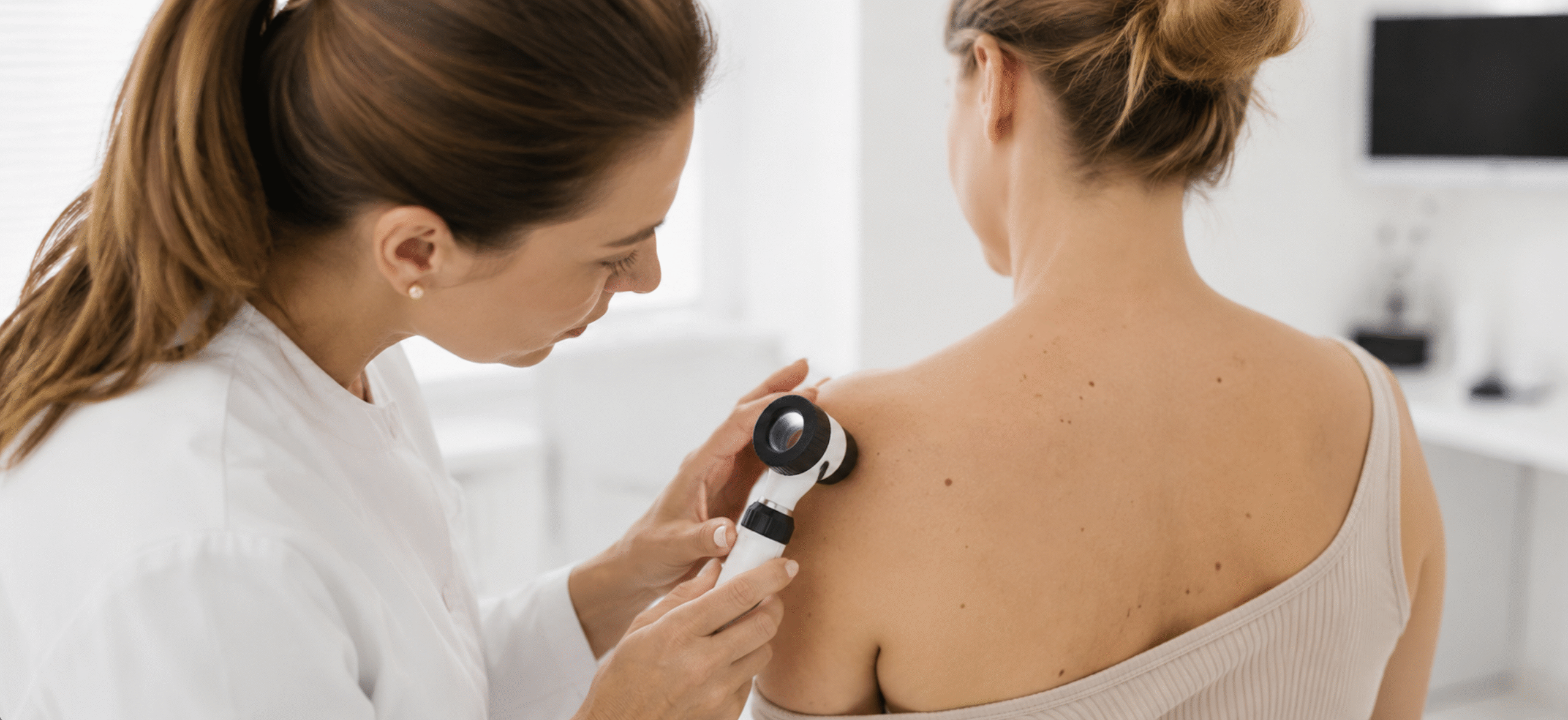
SunDoctors and SolarCareB3 have partnered to help Australians stay on top of their skin health, from professional skin checks through to everyday skin support.
For many Australians, skin health only becomes front of mind when something changes. A new mole, rough patch that won’t settle, spots that suddenly look different. That’s often what prompts people to book a skin check, and rightly so.
But a question we hear often is: “What should I actually be doing between appointments?”
Most advice out there focuses on what happens during a skin examination. Very little covers the months in between, which is where the habits that actually protect your skin happen day to day.
The short answer? Support your skin, protect your skin and pay attention to changes.
Support your skin between appointments
What you do between appointments matters. Patients often ask what skincare actually makes sense for skin that’s had years of Australian sun exposure.
It doesn’t need to be complicated.
A simple routine built around skin support and daily protection is often enough. Vitamin B3 (niacinamide) is one ingredient that comes up frequently, given its role in supporting skin barrier function, hydration, and the visible effects of environmental stress.
For many people, that might look like a straightforward B3 moisturiser alongside a daily SPF. For those wanting to simplify that even further, SolarCareB3’s Defence SPF 50 combines broad-spectrum sun protection with 5% B3, making morning skincare one less thing to think about. (Available in SunDoctors clinics.)
If you’re curious about how niacinamide benefits sun-affected skin, SolarCare has a helpful FAQ on Vitamin B3 for sun-damaged skin, plus a practical week-by-week guide on what to expect when using niacinamide.
Protect Your Skin Every Day, Not Just At The Beach
When people think about sun safety, they tend to picture putting on sunscreen at the beach and summer holidays. But for most Australians, the UV exposure that adds up over a lifetime is what you barely notice. Like the drive to work with the sun through the window, Saturday morning at the sports field, walking the dog, hanging out the washing, school pickup, or a few hours in the garden.
This kind of repeated, low-level exposure is easy to dismiss because it doesn’t always end in sunburn. But UV radiation damages skin cells whether your skin turns red or not. Over years and decades, that sun damage raises the risk of developing skin cancer, including melanoma and non-melanoma skin cancers such as basal cell carcinoma and squamous cell carcinoma. Melanoma is the most deadly form of skin cancer. If left untreated, it can spread to other organs. But caught early, most skin cancers are highly treatable.
Australia has some of the highest skin cancer rates in the world. Two thirds of Australians will be diagnosed with skin cancer during their lifetime, according to Cancer Council Australia. That makes skin cancer prevention part of overall health, not an optional extra.
Daily sun protection matters. Not just on the days that feel sunny enough to bother.
Apply broad-spectrum sunscreen daily, even on overcast days, and focus on the face, ears, neck, and hands. Reapply every two hours if you’re outdoors for a while, or after sweating or towelling off. Wear sun-protective clothing, a broad-brimmed hat, and sunglasses. Seek shade between 10am and 2pm, or whenever the UV index is 3 or above. And check the UV index, not just the temperature. UV levels in Queensland and other northern regions can be high even on cool or cloudy days.
Certain risk factors increase your skin cancer risk. Fair skin, light hair, a skin type that burns easily, a family history of melanoma, a family member who has had skin cancer, previous sun damage, or a history of too much sun exposure all put you in a higher risk category. High risk individuals may benefit from more frequent skin cancer checks and a yearly skin check rather than waiting longer between appointments. If you’re unsure about your risk, your doctor or general practitioner can help you assess it.
None of this is new. But there’s a gap between knowing it and doing it consistently, and that gap is where prevention either works or doesn’t.
Pay attention to changes
Between skin checks, the most useful thing you can do is get familiar with your own skin and notice when something shifts. Because skincare supports skin health. It does not diagnose suspicious lesions.
Self examination doesn’t replace a professional skin cancer check, but it helps you pick up on warning signs early so you can get a professional opinion before something has time to progress.
Try doing a self-check every three months or so. Not because things change that fast in most cases, but because if you know what your skin normally looks like, you’ll spot something new much faster.
You don’t need special equipment. A well-lit room, a full-length mirror, and a hand mirror for your back, scalp, hair line, and behind your legs. Check your entire body, including areas you might not think to look at. If someone can help you check, even better. Photographing spots you want to track is also useful. It gives your doctor context if you do need to book in, and it’s far more reliable than trying to remember what a mole looked like three months ago. Some people use smartphone apps to photograph and track spots, but these are not a substitute for a professional skin examination. Cancer Council Australia has a useful guide on how to check your skin at home.
When checking, look for:
- A new mole or spot, especially one that looks different from your others
- An existing spot that’s changed in size, shape, colour, or texture
- A mole where one half doesn’t match the other, or the border is uneven
- A spot larger than a pencil eraser (about 6mm) that you haven’t had checked
- A rough or scaly patch that won’t go away on its own
- A spot that bleeds, crusts, or doesn’t heal normally
- Anything that concerns you, even if you’re not sure why
Skin cancers can appear anywhere on the body, including places that rarely see the sun: between toes, under nails, on the scalp, the soles of the feet. If you normally wear nail polish, consider removing it from your fingers and toes before a self-check so you can see the nail bed clearly. A good self examination covers your entire body, front and back.
Early detection saves lives. You don’t need to be certain something is wrong before booking a full skin check. If it looks new, changed, or unusual, that’s reason enough. Early diagnosis gives your doctor the best chance of catching something before it becomes a bigger problem. That’s what skin cancer screening is for.
How often should you have a skin check?
Most Australians should have a professional skin check at least once a year. If you have a personal or family history of skin cancer, fair skin that burns easily, a high number of moles, or a lot of past sun exposure, your doctor may suggest a skin cancer check every three to six months instead.
For those at higher risk, your skin cancer clinic may also offer total body photography, a non invasive monitoring tool that photographs your entire body to track changes over time. It’s not available at every location, so check with your nearest SunDoctors clinic.
Your SunDoctors doctor can help work out the right schedule for you. But whatever the frequency, the habits above are what fill the gaps between appointments.
Looking after your skin long term
This isn’t about doing everything perfectly. It’s about a few consistent habits that reduce your risk of skin cancer and help you stay aware of what’s going on with your skin.
Protect your skin. Sunscreen, hat, shade. Every day, not just at the beach.
Support your skin. If it’s had years of Australian sun, a simple B3 and SPF routine can help.
Watch for changes. Check your skin regularly. And if something doesn’t look right, get it checked.
That’s why the SunDoctors and SolarCareB3 partnership works. Professional skin cancer assessment paired with everyday support for sun-affected skin. Not one or the other. Both.
The doctors at SunDoctors are experts in checking your skin for signs of skin cancer. With skin cancer clinics across QLD, NSW, VIC, and SA, book your skin check to give yourself and your family peace of mind.
Book online at www.sundoctors.com.au or call 13SKIN (13 75 46) today.