
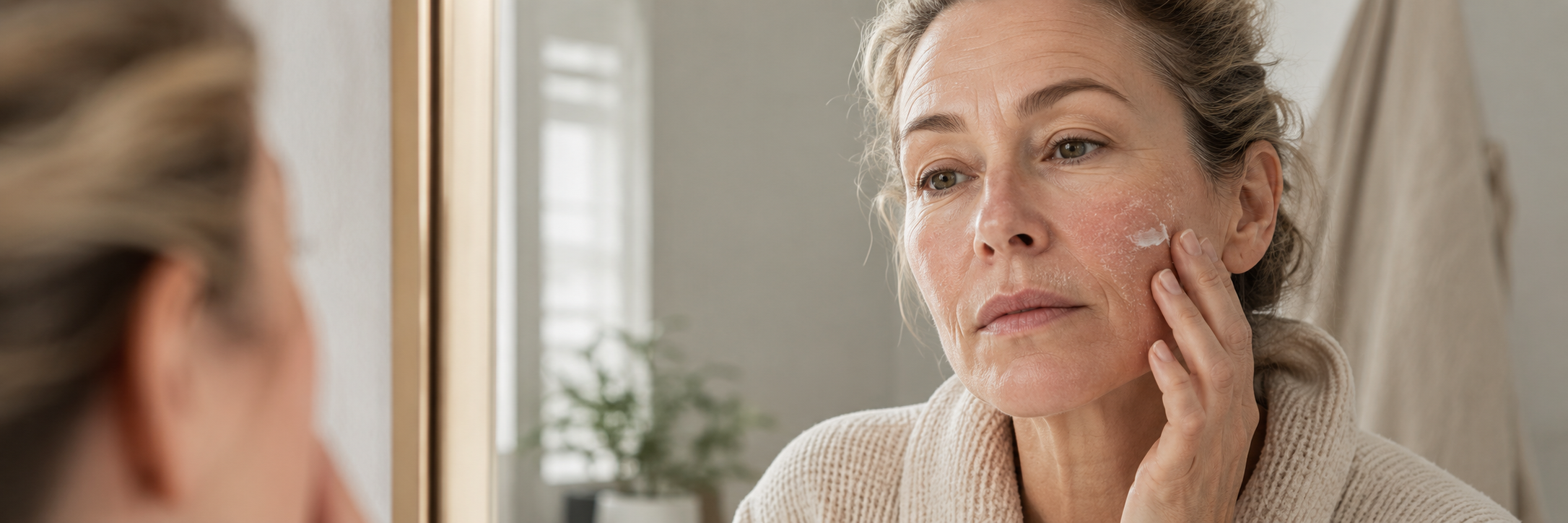
Dryness, tightness and sensitivity can sometimes be signs that your skin needs more than another layer of moisturiser. They may indicate that your skin barrier is under strain.
The skin barrier forms the outermost protective layer of your skin. It helps retain moisture while providing a defence against environmental stressors. When it is functioning well, skin generally feels comfortable, smooth and resilient. When it becomes disrupted, water can escape more easily and everyday products may suddenly feel irritating.
Understanding the signs of a weakened skin barrier can help you simplify your skincare routine and give your skin the support it needs.
What is the skin barrier?
The skin barrier is primarily located in the outer layer of the epidermis, known as the stratum corneum. It is often compared to a brick wall: skin cells form the bricks, while lipids such as ceramides and fatty acids act as the mortar holding everything together.
This structure helps reduce moisture loss and protects the skin from environmental irritants. As Healthdirect explains, skin also helps protect the body from infection, chemicals and physical damage while preventing excessive water loss.
A healthy skin barrier does not mean your skin will never become dry or irritated. It means it is better equipped to retain moisture and respond to everyday exposure.
What are the signs of a weakened skin barrier?
The signs can vary, but commonly include:
- persistent dryness or flaking
- tightness, particularly after cleansing
- increased sensitivity
- visible redness
- itching or discomfort
- rough or uneven texture
- stinging when applying products that were previously comfortable
A weakened skin barrier may also make skin feel both oily and dehydrated. When water levels are low, the skin can still produce oil, so shine does not necessarily mean the skin is adequately hydrated.
These symptoms can also be associated with skin conditions that require professional advice. Speak with a pharmacist, GP or dermatologist if the irritation is persistent, painful, worsening or difficult to manage.
What can weaken the skin barrier?
Many everyday habits can place pressure on the skin barrier.
Harsh cleansers, frequent exfoliation and using too many active ingredients at once can strip away surface lipids or leave the skin feeling irritated. Hot showers, dry air, wind and low humidity can also increase moisture loss.
UV exposure is another important factor. Sun exposure can affect the skin’s moisture levels, appearance and resilience over time. This is why daily sun protection remains part of a skin barrier-friendly routine, even when the weather feels cool.
Ageing can also influence barrier function. As the skin changes, it may produce fewer of the lipids that help retain moisture. Skin that was once comfortable with a complicated routine may begin to respond better to gentler, more consistent care.
How can you support a weakened skin barrier?
The first step is often to do less.
Temporarily reduce exfoliating acids, scrubs, retinoids or other strong active ingredients if they are causing discomfort. Avoid introducing several new products while your skin feels reactive. A simple routine makes it easier to identify what is helping and what may be contributing to irritation.
Use a gentle cleanser and lukewarm water rather than very hot water. Cleanse only as often as necessary and avoid scrubbing the skin.
Apply moisturiser regularly, particularly after showering or bathing, to help maintain moisture in dry or sensitive skin. Better Health also recommends avoiding products that dry or irritate the skin and choosing a moisturiser that suits you.
Most importantly, give your routine time. Skin barrier support is usually built through consistent daily habits rather than a single intensive treatment.
How does niacinamide support the skin barrier?
Vitamin B3, commonly used in skincare as niacinamide, is a well-researched ingredient that can help support barrier function and moisture retention.
Niacinamide supports the production of ceramides and other lipids found in the outer layers of the skin. These lipids help reinforce the structure of the skin barrier and reduce excessive moisture loss.
It may also help support visible redness and improve the overall comfort and appearance of dry or sensitive skin. Unlike some stronger skincare actives, niacinamide is generally easy to incorporate into a simple daily routine.
You can learn more about niacinamide and sun-damaged skin in our Vitamin B3 FAQ.
The original SolarCareB3 5% B3 Moisturiser provides lightweight moisturisation for the face and body. It contains glycerin to attract moisture and 5% Vitamin B3 to help support skin barrier function, hydration and the appearance of sun-damaged skin.
Should you still use sunscreen when your barrier feels sensitive?
Yes. UV protection remains important, particularly for skin that is already dry, sensitive or showing signs of sun damage.
Choose a sunscreen that feels comfortable enough to apply generously and consistently. Fragrance-free formulas may be preferable when your skin is feeling reactive.
Defence SPF 50 with 5% niacinamide combines broad-spectrum SPF 50 protection with lightweight moisturising support. It is fragrance-free, non-greasy and formulated without a white cast, making it suitable for daily use on the face and body.
Apply sunscreen before sun exposure and reapply as directed, particularly after swimming, sweating or towel drying. Sunscreen should also be used alongside protective clothing, shade, a broad-brimmed hat and sunglasses.
A simple routine for skin barrier support
When your skin feels overwhelmed, a basic routine may be enough:
Morning: Gently cleanse if needed, apply moisturiser, then finish with broad-spectrum SPF 50.
Evening: Cleanse gently and apply a Vitamin B3 moisturiser to support hydration overnight.
Avoid adding multiple serums or strong active ingredients until your skin feels settled. Once comfort has returned, reintroduce products gradually rather than restarting everything at once.
If you’re looking to build a gentle routine emphasising B3 skincare and suncare, complete our Quiz.